


OET best-selling 5000mAh wireless charging power bank uses solid-state batteries, offering superior safety and energy density. We believe these batteries will drive the trend for power banks over the next two years.
A semi solid-station battery uses a special mix of solid and gel-like materials to store and release energy. This design makes batteries safer, lighter, and longer-lasting for devices people use every day. Companies like Honda and Toyota now develop batteries that charge much faster, making electric vehicles and power bank etc. easier to use.
In 2023, the market for these batteries reached $83.2 million, with consumer electronics holding a 38% share, showing growing demand for better battery technology.
Key Takeaways
- Semi solid-state batteries use a gel-like material that makes them safer, lighter, and longer-lasting than traditional batteries.
- These batteries charge faster and hold more energy, helping devices run longer and work better in different temperatures.
- They combine the safety of solid-state batteries with the easier and cheaper manufacturing of lithium-ion batteries.
- Semi solid-state batteries last up to 3,000 charge cycles, making them ideal for daily use in phones, cars, and other devices.
- While challenges remain, growing industry support and real-world products show these batteries will become more common soon.
What Is a Semi Solid-State Battery?
Basic Definition
A semi solid-station battery combines elements from both traditional liquid batteries and advanced solid-state batteries. This type of battery uses a gel-like or viscous electrolyte instead of a fully liquid or fully solid material. The gel contains lithium salts suspended in a matrix, which helps move ions between the battery’s electrodes. This design improves safety and performance compared to older battery types. Many leading companies now focus on this technology because it offers a balance between cost, safety, and energy storage.
Recent research shows that semi solid-station batteries can reach single-cell capacities around 30Ah and energy densities above 300 Wh/kg. Some manufacturers even aim for 350 Wh/kg. These batteries can last for about 1,000 cycles, making them reliable for daily use. The unique structure allows for faster charging and better performance, especially in devices that need quick and safe energy delivery.
Key Features
Semi solid-station batteries stand out because of several advanced features:
- The gel electrolyte improves ion movement, which allows for faster charging and better efficiency.
- The gel structure resists the growth of dendrites, which are tiny, needle-like formations that can cause short circuits in other batteries.
- These batteries offer higher energy density, usually between 300 and 350 Wh/kg, compared to 200–260 Wh/kg for standard lithium-ion batteries.
- The design provides longer cycle life, often between 1,000 and 3,000 cycles, and better thermal stability, which reduces the risk of overheating or fire.
- Manufacturers can produce semi solid-station batteries using existing lithium-ion battery lines, making them more scalable and cost-effective.
- The batteries show strong performance in cold weather and maintain safety even under stress.
Note: Companies like CATL, Grepow, and QuantumScape have demonstrated these features in real-world tests, showing that semi solid-station batteries are ready for broader use in electric vehicles, drones, and consumer electronics.
These features make the semi solid-station battery a promising choice for the next generation of portable power solutions.
How Semi Solid-State Batteries Work
Structure and Materials
A semi solid-station battery uses a unique combination of materials to improve performance and safety. The main structure includes a semi-solid electrolyte, which contains solid conductive particles suspended in a liquid. This design prevents leaks and lowers the risk of overheating. The electrodes in these batteries look like sponges with many tiny holes. These porous structures hold more active material than regular solid electrodes, which helps the battery store more energy.
Researchers have found several ways to make these batteries better:
- Dense, thin-layer electrolytes and high-density cathodes boost energy storage.
- Composite electrodes and flexible, gel-like materials help control the expansion of the battery’s parts during use, making the battery last longer.
- Superionic conductors and hybrid electrolytes allow the battery to work well in hot or cold weather.
- Lithium-metal composite electrodes and non-flammable solid electrolytes make the battery tougher and safer.
- Using common raw materials and simple processing methods keeps costs down and makes large-scale production possible.
The combination of these materials and structures gives the semi solid-station battery its high energy density, long life, and strong safety features.
Ion Transport
Ion transport is the process that allows a battery to charge and discharge. In a semi solid-station battery, ions move through both solid and liquid parts of the electrolyte. This movement is not always smooth. The way ions travel depends on the contact between different materials inside the battery. Sometimes, the contact is not perfect, but the battery still works well because ions can find new paths inside the particles.
Scientists have used advanced tools to see how ions move. They discovered that cracks and uneven surfaces inside the battery can slow down ion movement and cause the battery to lose power over time. To fix this, engineers design the battery with single crystal or dense polycrystalline particles and flexible electrolytes. These changes help ions move more easily and keep the battery working longer.
Tip: The balance between ionic and electronic movement inside the battery helps maintain steady performance, even if the pathways are not perfect.
Battery Comparison
Semi Solid-State vs. Solid-State
Solid-state batteries use only solid materials for their electrolytes. This design gives them the highest safety and energy density among battery types. They do not use flammable liquids, so the risk of fire is very low. Solid-state batteries also last longer because they resist chemical breakdown. However, making these batteries is difficult and expensive. Manufacturers need special materials and precise methods, which raises costs. Recycling solid-state batteries is also a challenge because the technology is still new.
A semi solid-station battery uses a gel-like electrolyte instead of a fully solid one. This design keeps many of the safety benefits of solid-state batteries but makes manufacturing easier and less costly. The gel structure allows for better ion movement, which supports fast charging and strong performance in different temperatures. Semi solid-state batteries can use some of the same equipment as lithium-ion batteries, making them more practical for large-scale production.
Semi Solid-State vs. Lithium-Ion
Lithium-ion batteries use a liquid electrolyte, which can catch fire if damaged or overheated. They have lower energy density, usually between 150 and 250 Wh/kg, and their capacity fades after 500 cycles. In contrast, semi solid-state batteries offer higher energy density—often 300 Wh/kg or more—and can last up to 3,000 cycles. They also charge faster and stay stable during rapid charging.
Here is a simple comparison table:
| Aspect | Lithium-Ion Battery | Semi Solid-State Battery |
|---|---|---|
| Electrolyte Type | Flammable liquid | Gel, semi-solid |
| Energy Density | 150-250 Wh/kg | 300-500 Wh/kg |
| Safety | Risk of fire | Enhanced safety |
| Cycle Life | 500-1500 cycles | Up to 3000 cycles |
| Fast Charging | Can overheat | Supports rapid charging |
| Manufacturing | Established, low cost | Similar process, easier scaling |
A semi solid-station battery bridges the gap between lithium-ion and solid-state batteries. It combines the safety and high energy of solid-state designs with the easier manufacturing and lower cost of lithium-ion batteries. This balance makes it a strong choice for electric vehicles, consumer electronics, and renewable energy storage.
Semi Solid-State Battery Benefits
Safety
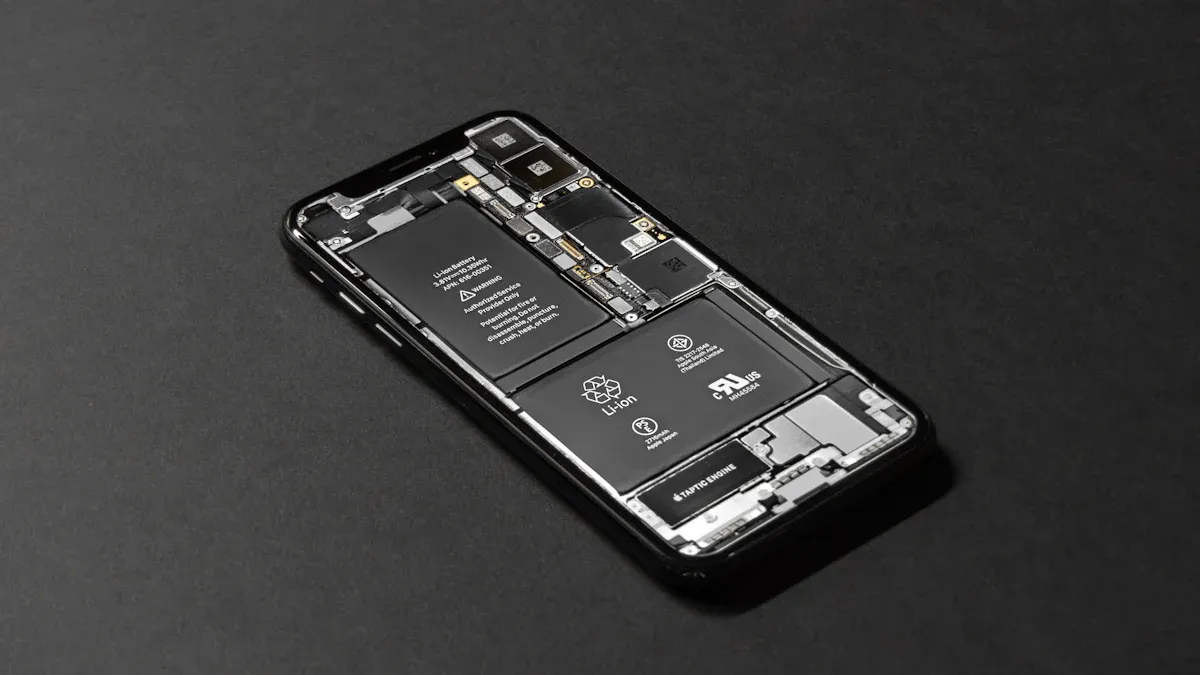
Safety stands as a top priority for any battery technology. The semi solid-station battery uses a gel-like electrolyte, which helps prevent leaks and lowers the risk of fire. Researchers have compared batteries with semi-solid electrolytes to those with liquid electrolytes. The results show that semi solid-station batteries heat up more slowly and produce less dangerous gas during stress tests. The table below highlights some key safety differences:
| Parameter | LFP-SS (Semi-solid electrolyte) | LFP-L (Liquid electrolyte) |
|---|---|---|
| Temperature rise rate | Slower | Faster |
| Thermal runaway temperature | Lower | Higher |
| Total gas production volume | Lower | Higher |
| Gas composition | Less H₂ and hydrocarbons | More H₂ and hydrocarbons |
| Explosion limits at 100% SOC | Higher | Lower |
These results mean that devices using semi solid-station batteries are less likely to overheat or catch fire, even under tough conditions.
Energy Density
Energy density measures how much power a battery can store in a given space. The semi solid-station battery offers a clear advantage here. Laboratory tests show that these batteries can reach energy densities of up to 1070 Wh/L, while top lithium-ion batteries reach about 800 Wh/L. This higher energy density allows devices to run longer on a single charge and makes batteries smaller and lighter.
Durability and Lifespan
A battery’s lifespan depends on how many times it can charge and discharge before losing capacity. Semi solid-station batteries last longer than many traditional batteries. Their gel-like structure resists damage from repeated use and helps prevent the growth of harmful structures inside the battery. Many models can handle up to 3,000 cycles, making them ideal for daily use in phones, laptops, and electric vehicles.
Environmental Impact
The environmental impact of batteries depends on how they are made and used. Studies show that making solid-state batteries can use a lot of energy, especially during high-temperature steps. However, the higher energy density of semi solid-station batteries means that devices need fewer charges and less fuel over their lifetime. Some research suggests that these batteries could lower greenhouse gas emissions by up to 58% compared to older types, especially if factories use cleaner energy. The choice of materials and improvements in manufacturing will play a big role in making these batteries even greener in the future.
Real-World Use and Challenges
Applications Today
Semi solid-station battery technology has moved from the lab to real products. The Skyfie SF-SPB20 semi solid-state magnetic wireless charger power bank stands out as a leading example in consumer electronics. This power bank offers users a safer, more durable, and longer-lasting portable charging solution. It features magnetic wireless charging, supports the latest QI standards, and has earned certifications like CE, FCC, RoHS, and UN38.3. Skyfie designed the SF-SPB20 to survive extreme conditions, making it reliable for both daily use and outdoor adventures.


Automotive companies have also started using semi solid-station battery technology. Dongfeng Motor Corporation launched 50 E70 vehicles equipped with these batteries. These cars performed well in real-world driving, showing that the technology works outside the lab. Nio’s ET7 sedan uses a semi solid-state battery and can travel up to 650 miles on a single charge, setting a new standard for electric vehicle range.
| Model | Battery Type | Range (miles) |
|---|---|---|
| Nio ET7 | Semi-Solid-State | 650 |
Industry Adoption
Many industries now explore semi solid-station battery solutions. Electric vehicles, aerospace, drones, grid storage, and medical devices all benefit from the improved safety and energy density. Companies like CATL, WeLion, Farasis Energy, and Zendure have started to develop and sell products using this technology. Zendure, for example, focuses on portable power stations for consumers. Skyfie’s ecosystem includes wireless charging stations and MagSafe-compatible accessories, showing how the technology fits into daily life.


Note: The growing interest from leading manufacturers signals a shift toward safer and more efficient batteries across many sectors.
Limitations
Despite progress, the semi solid-station battery industry faces several challenges. Technical issues include improving ionic conductivity and thermal stability. Manufacturing remains costly and complex, with mass production methods still under development. Market adoption moves slowly because many consumers are not yet aware of the benefits. Existing infrastructure for battery production and recycling mainly supports lithium-ion batteries, making the switch more difficult.
| Challenge Category | Specific Challenges and Obstacles |
|---|---|
| Technical Challenges | Ionic conductivity, thermal stability, lithium dendrite buildup. |
| Manufacturing Challenges | High costs, scalability, uniformity in materials. |
| Market Adoption Hurdles | Consumer awareness, infrastructure adaptation, competition from lithium-ion. |
| Future Obstacles | Cost competitiveness, durability, regulatory compliance, real-world engineering validation. |
Researchers and companies continue to work on these problems. They focus on reducing costs, improving performance, and meeting safety standards. As more products like the Skyfie SF-SPB20 reach the market, the semi solid-station battery will likely become even more common in everyday devices.
The semi solid-station battery offers safer, longer-lasting, and more powerful energy storage for modern devices and vehicles. Market forecasts show strong growth as manufacturers invest in better materials and production methods. Companies in Asia-Pacific, North America, and Europe lead the way, supported by clean energy policies and rising demand for electric vehicles. Ongoing research and new partnerships promise even more affordable and sustainable batteries in the near future.
FAQ
What makes semi solid-state batteries safer than regular lithium-ion batteries?
Semi solid-state batteries use a gel-like electrolyte. This material resists leaks and reduces fire risk. Devices with these batteries stay cooler and handle stress better. Users can trust them in more situations.
How long does a semi solid-state battery usually last?
Most semi solid-state batteries last between 1,000 and 3,000 charge cycles. This means they can power devices for several years before losing much capacity.
Can users charge semi solid-state batteries faster than other types?
Yes. Semi solid-state batteries support rapid charging. The gel electrolyte allows ions to move quickly, so devices spend less time plugged in.
Are semi solid-state batteries compatible with current devices?
Many semi solid-state batteries fit existing devices. Manufacturers design them to work with standard charging ports and accessories. Users can upgrade without changing their favorite gadgets.